How to Build a Mind So Calm, It Makes People Nervous

By Joshua Vecchio: Certified Personal Trainer, B.S. Biology & Exercise Science
There's a scene in Saving Private Ryan where a soldier named Upham hears a scuffle going down between one of his comrades and a Nazi soldier.
Upham cocks his rifle and starts making his way up the stairs.
But, like a deer in headlights, he's so paralyzed by fear that he stops halfway up the stairwell and starts weeping.
The camera pans back to his comrade in the room upstairs. The Nazi soldier is on top of him with his combat knife slowly inching closer to his heart.
All Upham has to do is turn the corner and shoot him.
It's painful to watch. Every second feels like a minute.
The scene ends with an eerie silence, followed by the Nazi soldier emerging out of the room, victorious.
Upham is shaking in his boots so pitifully that the Nazi doesn't even take him seriously enough to kill him. He just nonchalantly walks past him down the stairs and out of the building.
Fear isn't the only emotion that can paralyze you.
Anger is equally crippling.
I once got an email from my manager informing me of upcoming pay cuts that were totally baseless and unjustified.
I was enraged. My fiancée had just lost her job, so our situation was already tight.
When I saw that the pay cuts would put us below our target savings rate, I hurled a bottle of almond milk across the room in a fit of rage.
For the first time ever, my fiancée felt afraid in our own home.
That email turned out to be one of the best things that ever happened to me.
My reaction to it showed me that I needed to get a handle on my anger. And it made me realize that my role wasn't a good opportunity anyway.
The numbers showed that I could've made almost twice as much money if I doubled down on my personal training business.
So I decided to step down.
When I met with my manager, he didn't take it well. He pushed every button under the sun: guilt-tripping, fear mongering, finger-pointing, the whole nine yards.
But I couldn't have handled it better.
I remained composed, respectful, and unwavering in my decision.
Which was one of the best decisions of my life.
In less than a month, I was making more money in fewer hours than I was before I stepped down.
That allowed me to provide for my fiancée and me, and left me with more time and bandwidth to build this men's health coaching business.
There are three key lessons I want you to take away from my story:
- Emotions can ruin life. What if I sent an email that got me fired or made a rash financial decision I couldn't reverse?
- Emotions cloud your judgment. My anger blinded me to the fact that those pay cuts were actually a blessing in disguise.
- Anyone can improve their ability to regulate their emotions with proper training.
Lesson #3 is what this article is all about.
I'm going to share with you a few of the tools I used to go from the guy who was throwing almond milk across the room, to the man capable of handling one of the hardest conversations of my life with grace.
Because livelihoods can be lost in an instant.
There are countless examples of celebrities and highly influential people throughout history ruining their reputations, careers, and lives from one bad move.
Alexander the Great ran a spear through the chest of one of his long-time friends during a drunken dispute, an act that haunted him for the rest of his life.
Zinedine Zidane, one of the greatest soccer players of all time, headbutted an opponent during the 2006 World Cup final, the last match of his career. He was sent off, and France lost the shootout without him.
Mike Tyson bit a piece of Evander Holyfield's ear off in 1997. He was disqualified and lost his boxing license.
Will Smith walked on stage and slapped Chris Rock at the 2022 Oscars, and was banned from Academy events for ten years.
Years of work, undone in seconds.
You might be guilty of a similar blunder.
Maybe you lost a great woman because you lashed out one too many times.
Maybe you're the "crazy guy" in the office who people keep their distance from.
Maybe you haven't talked to a family member in decades because one hard conversation went south.
Even if you haven't blatantly shot yourself in the foot, emotions can quietly keep you from reaching your fullest potential without you realizing it.
You can have the best business plan in the world. But if you're so afraid of failure that you never launch it, it'll never exist.
You can have the most brilliant ideas in the room. But if you're too crippled by anxiety to speak up in meetings, or present them to a crowd, you won't advance in your career.
You can have the gift of intelligence and ambition. But if you get stressed out by every little thing, you won't last. Chronic stress is literally a killer (1).
The most common cause of defeat isn't the enemy. It's self-inflicted wounds.
That's why emotional regulation is the single most important skill you can develop.
Here's the good news: you don't have to eliminate emotions to stay in control.
You just have to see them coming.
Everything in this article comes down to three moves:
- Notice. Catch the emotion in its first seconds.
- Interrupt. Defuse the emotion before it takes over.
- Train in advance. Build both skills long before you need them, so they're available to you when you do.
If you're tired of self-sabotaging and want to get a handle on your emotions once and for all, book a call and I'll help you apply this process to your situation.
Why You Can't Think Straight When It Matters
To understand how any of the tools in this article work, you have to understand how emotions work.
When you experience a strong emotion, your sympathetic nervous system mounts a generalized fight-or-flight response that is virtually identical regardless of the emotion.
When you look at the processes taking place inside the body of any angry person and a fearful person, they're very similar.
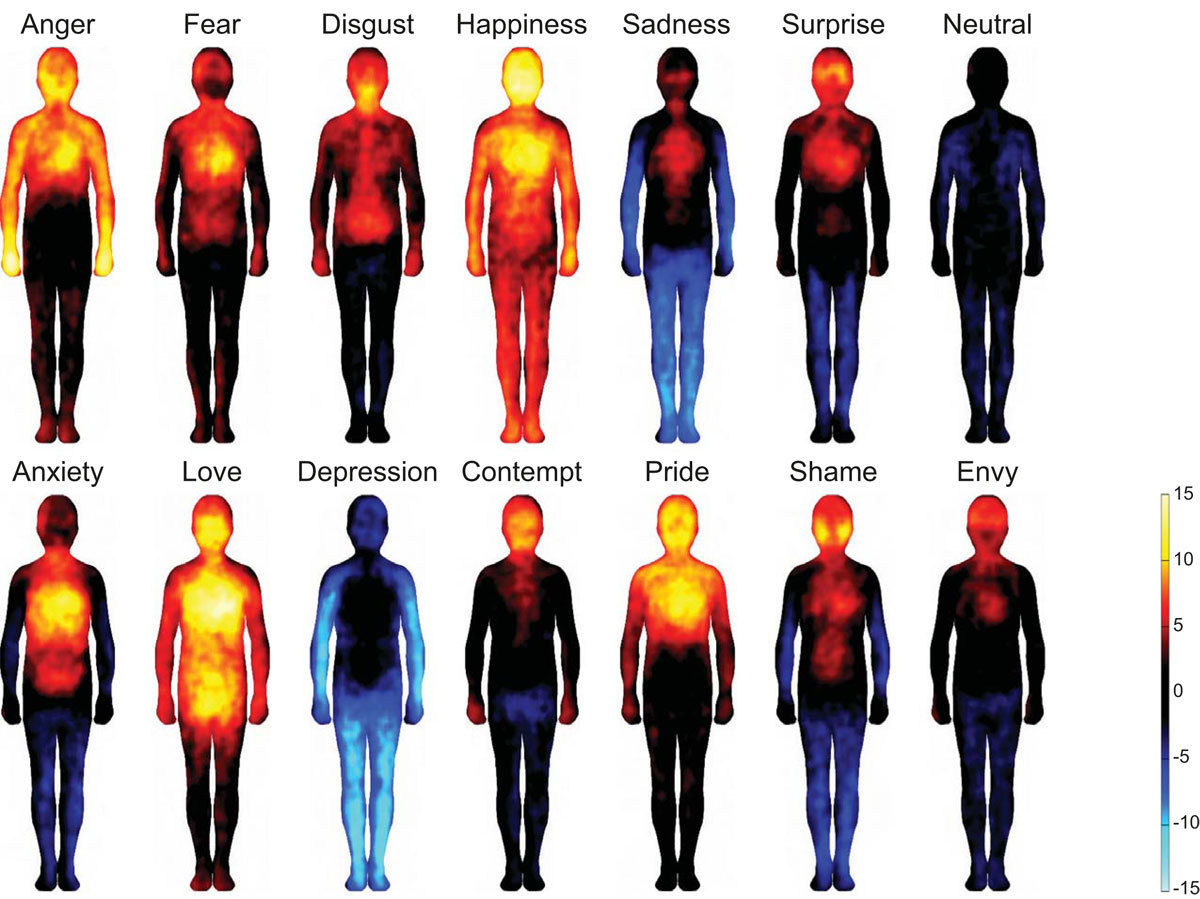
Both fear and anger (the two main categories of strong negative emotions) originate in the amygdala (the brain's threat-detection center), which triggers a flood of stress hormones like adrenaline and cortisol.
Both of those hormones work together to:
- Mobilize stored energy (glucose)
- Elevate heart rate
- Increase blood pressure
...all of which work to deliver oxygen and glucose to major muscle groups, which would've helped our ancestors fight or flee.
That's great news because it means the tools we can use to counteract any intense emotion will work on all emotions. More on that later.
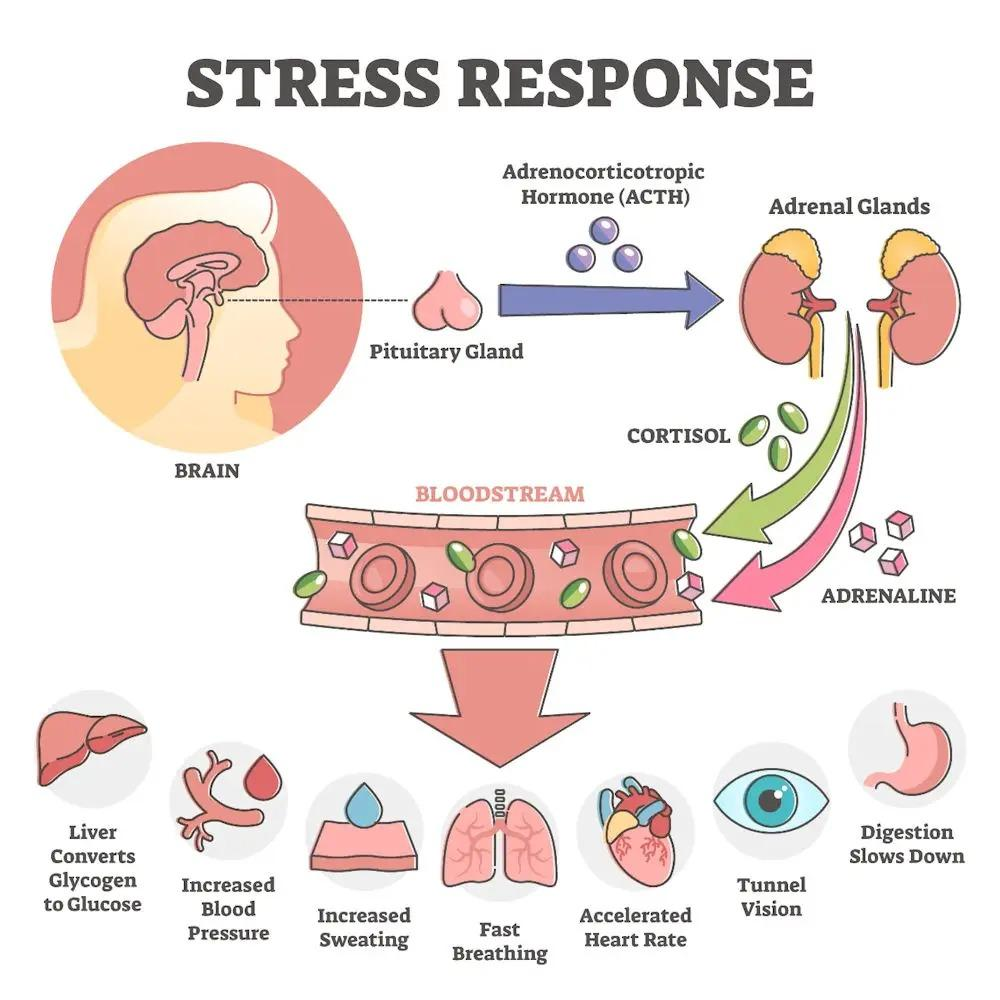
All that blood being sent to your body comes at the expense of blood flow to your brain.
Emotions shut down a region of your brain called the prefrontal cortex: the part of the brain responsible for rational thought and self-control (2).
That's because the brain requires a lot of energy, and in a life or death situation, that energy is better spent on fighting or fleeing than thinking.
Experientially, the prefrontal cortex is the "higher self" that tells you not to punch your boss in the face, or spew all the nasty words you want to say to someone you resent.
So when your prefrontal cortex gets overridden by emotion, you end up doing or saying things that make you wonder "what the hell was I thinking?"
You weren't.
The part of your brain that's in charge of thinking rationally was offline.
That's why you don't have access to your highest wisdom or your best self in heated moments.
So how can we put the brakes on the fight-or-flight response?
How can we keep the blood in our prefrontal cortex?
Step 1: Notice Before It Takes Over
Thoughts are the "root cause" of emotions, which go on to kindle more of the same types of thoughts that gave rise to them in the first place.
This creates a self-fulfilling feedback loop that can spiral out of control if you don't catch it before it's too late.
Your move is to catch emotions as early as possible, because the sooner you do, the easier they are to control.
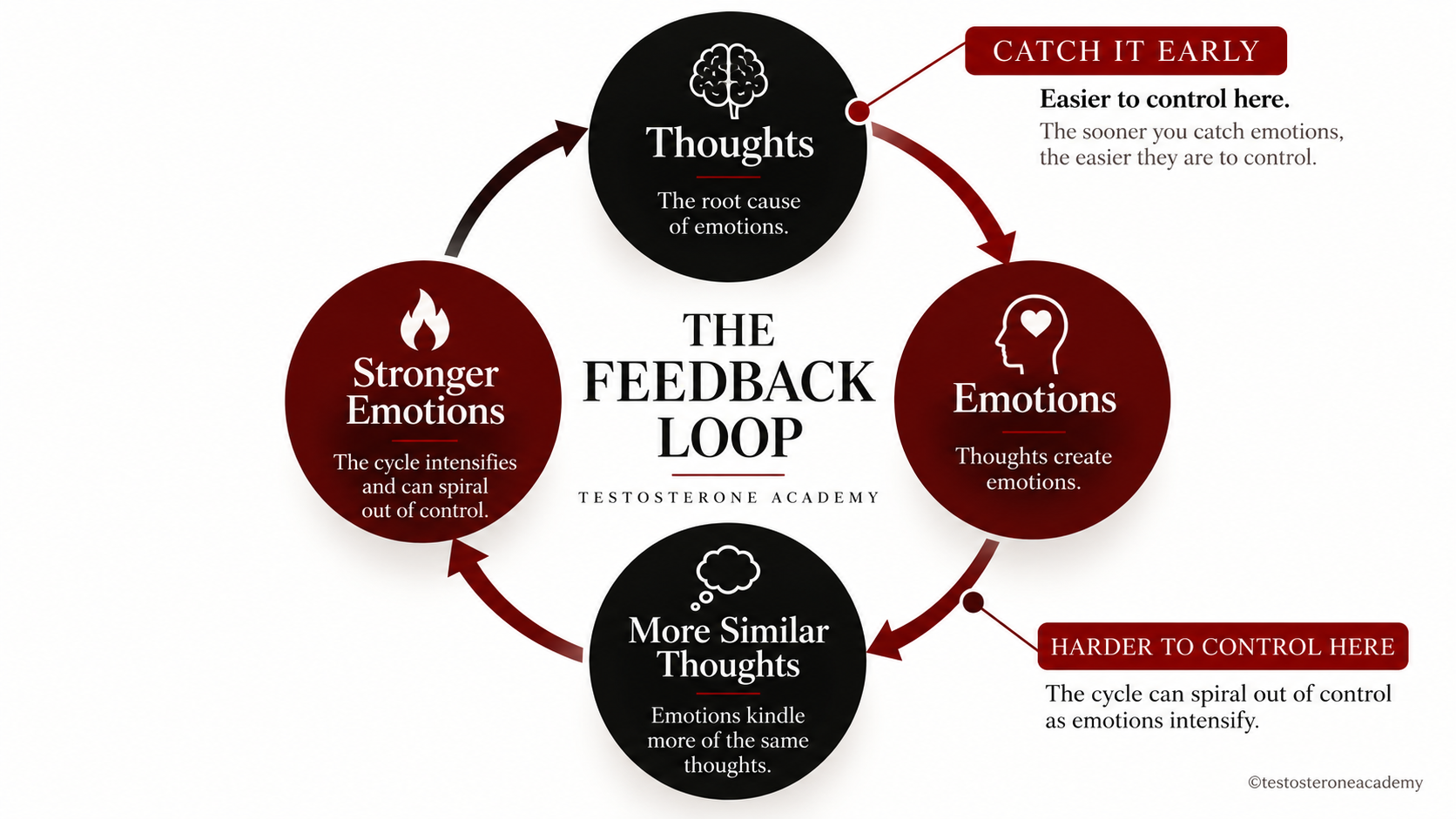
Since thoughts are the seeds of emotions, the earliest stage at which you can catch an emotion is the thought that precedes it.
- Thought → "I can't believe he cut my pay!" Emotion → anger
- Thought → "What if I leave my job and can't find a new one?" Emotion → fear
Noticed for what they are, mere words and images in your mind, thoughts lose their power over you completely.
"I can't believe he cut my pay!" no longer means you must become angry.
Imagining all the ways a conversation could go wrong no longer means you must be anxious.
Because they're just words and images in your mind.
That ability, to separate your awareness of thoughts from the thoughts themselves, is called mindfulness. To "be mindful" means to notice the thoughts and emotions from a detached perspective.
There's only one way to cultivate mindfulness: meditation.
Meditation is simply the practice of consciously noticing your thoughts and emotions as appearances in consciousness, just like a sight or sound.
Thoughts can be deceptively slippery, though, and some inevitably escape the notice of even the most experienced meditators.
So if you don't catch the thoughts that make you emotional, your next move is to catch the emotion itself by noticing the early warning signs showing up in your body (3): your face flushing, heart pounding, palms sweating, jaw clenching, etc.
When you're actively being mindful of an emotion, the emotion is "down there," happening as a totally separate process in your body, while your rational mind remains intact.
It's as if you're watching the emotions of another person, not your own, which enables you to rise above and prevent them from influencing your behavior.
From that perspective, you aren't having an emotional reaction.
You're noticing an emotional reaction.
Psychologists call this "cognitive distancing," and it's incredibly empowering, because you can choose to stop being angry the moment you notice anger.
You can decide not to be afraid when you become aware of fear.
If you make meditation a habit, you'll find that simply being mindful of an emotion, that is, noticing its presence and recognizing that it's just sensations in your body, is often enough for it to subside on its own.
But sometimes it's not.
When emotions get hard to handle, you need a more potent intervention.
Step 2: Interrupt It With Your Breath
The most direct and effective way to gain conscious control over your emotions is through your breath.
We can't voluntarily slow our heart rates, reduce our blood pressure, stop our adrenal glands from secreting cortisol, and send blood back to our brains.
But we can decide to breathe slowly and deeply in any moment.
And that indirectly slows our heart rate, lowers our blood pressure, stops cortisol secretion, and returns blood flow to our brains by tipping our nervous systems from the sympathetic, "fight or flight" state that strong emotions put us in, to its reciprocal: the calm, parasympathetic, "rest and digest" state.
Deep breathing activates the parasympathetic nervous system because when we breathe deeply, our diaphragm makes direct physical contact with the vagus nerve at a junction called "the esophageal hiatus."
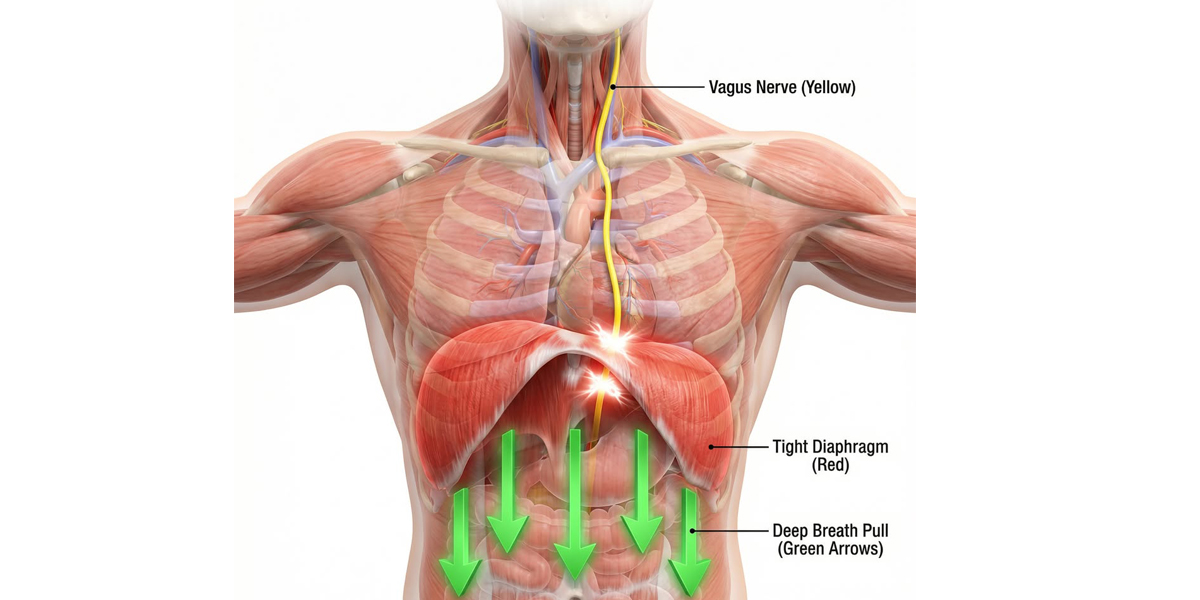
When stimulated, the vagus nerve deactivates your sympathetic nervous system.
But that can only happen when your breathing is sufficiently deep. Otherwise, your diaphragm won't descend low enough to reach the esophageal hiatus.
Why does vagus nerve stimulation deactivate the sympathetic nervous system?
Evolutionarily, humans could only afford to breathe slowly and deeply when conditions were safe. Anytime we had to fight, flee, or exert ourselves, our respiratory rate would rise by necessity to rapidly deliver oxygen to our muscles.
So slow, deep breathing tells your nervous system that you're safe. Fast, shallow breathing tells your nervous system you're in danger.
In the modern world, we often perceive benign external stimuli, some of which only exist in our minds, as threats to our survival: hard conversations, job interviews, a negative savings rate, worrying about what others think of us, etc.
Since our nervous systems can't differentiate between stressors, our bodies respond to a tense discussion in 2026 the same way they evolved to respond to a saber-toothed tiger in the Paleolithic era: by launching the fight or flight response, which is accompanied by fast, shallow breathing.
The only direct physiological access point through which we can take conscious control over this mechanism is our breath.
There are a few different breathwork techniques you can try, but they're all means to the same end: slowing and deepening your breathing.
The Physiological Sigh
The most potent of them all is the physiological sigh.
To perform a physiological sigh, inhale as deeply as you can through your nose to fill your lungs with as much air as possible while expanding your belly outward, then, take one final, forceful inhale to inflate your lungs to their maximum capacity.
Then, exhale as slowly as you can control through your nose or mouth until your lungs are empty. Repeat this process one to three times, or as many as you need, until the strong emotion subsides.
Two key points to make this, or any other breathing technique, maximally effective for quelling intense emotions:
- Your exhale should be longer than your inhale. This rebalances the ratio of carbon dioxide to oxygen in your blood, which works to suppress the fight or flight response (the same reason why people breathe into a paper bag when hyperventilating).
- You need to breathe deeply down into your belly so that your diaphragm descends low enough to make contact with your vagus nerve.
The reason why the physiological sigh is called "physiological" is because humans and other mammals do it innately.
The self-soothing, involuntary, in-in, out-breathing pattern people do when they cry, or the long, drawn-out exhale dogs do before taking a nap, are both examples of the physiological sigh occurring naturally.
Since the physiological sigh is evolutionarily hardwired into our nervous systems, and it leverages the accentuated exhale mechanism, it is the most effective breathing technique for managing strong emotions.
But it's not the only one.
Steal This Tactic From The Navy SEALs
The Navy SEALs teach a technique called box breathing, where you inhale for four seconds, hold for four seconds, exhale for four seconds, hold for four seconds, and repeat.
Box breathing works well, but a head-to-head study found that cyclic sighing (the physiological sigh repeated for five minutes) improved mood more than box breathing, mindfulness meditation, or breath retention (4).
So if you have to pick one, pick the sigh.
Use Power Posing to Face Your Fears
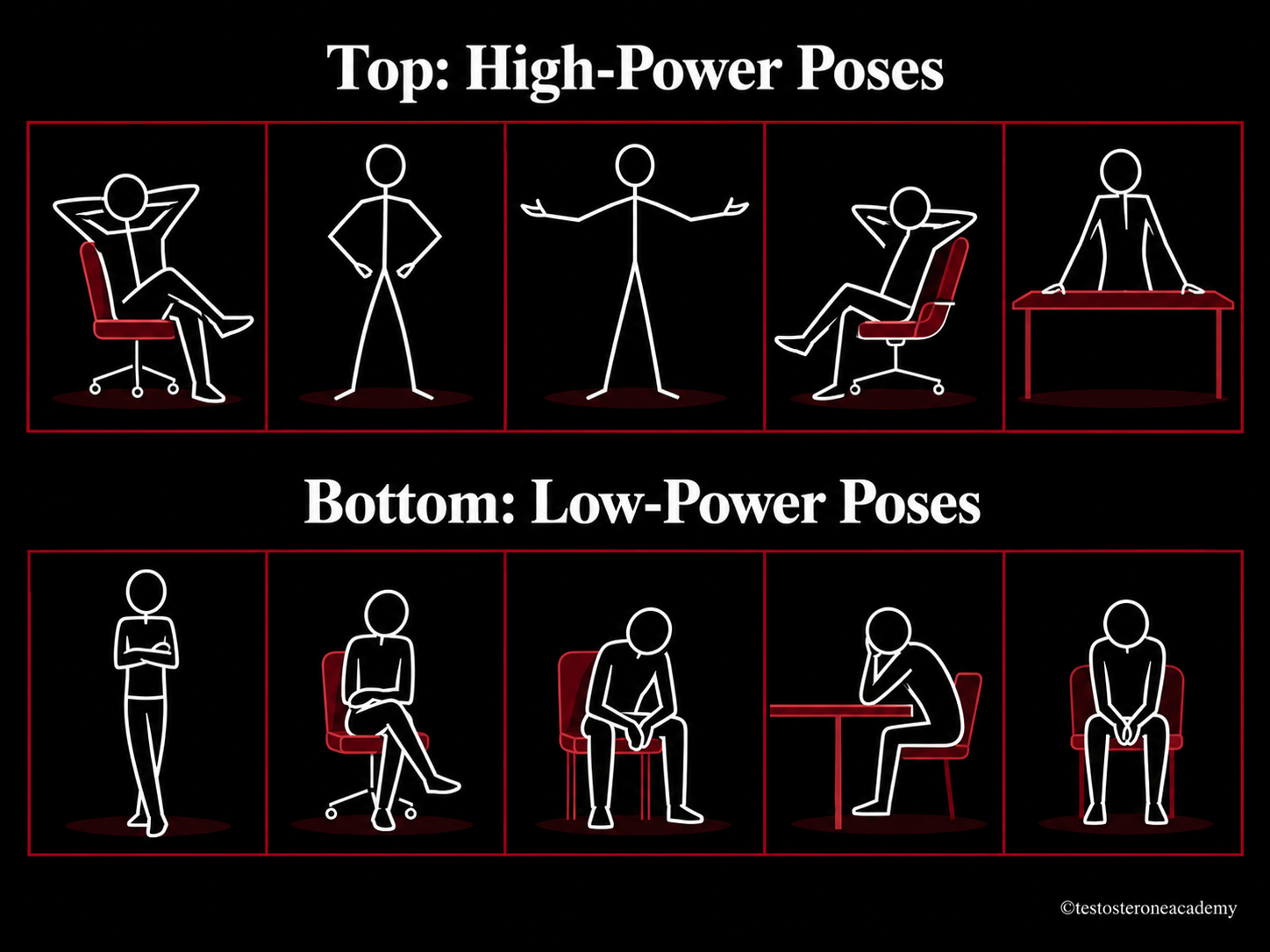
There is a bidirectional relationship between your emotions and your posture and facial expressions: your emotions affect your affect, but you can change your emotions by changing your posture.
Assuming a relaxed, confident, dominant posture decreases cortisol and increases testosterone, which reduces fear and anxiety.
So if you're afraid of something (a job interview, a hard conversation, an important presentation, a high-stakes decision, etc.), don't slouch, shrug up your shoulders, sit with your knees close together, or fold your arms across your midline.
Instead, sit up straight, stand tall, make your chest proud, draw your shoulders down and back, "manspread" your arms and legs to take up space.
Research shows that smiling can reverse depressive symptoms and suppress anger.
So if you're pissed off about something, unfurrow your brow, release your jaw, unclench your fists, and force a smile if you can.
That's all for the measures you can take to tamp down emotions in the moment.
Now for ways to train your emotional regulation skills outside of emotionally charged situations, so you're better able to manage them with grace when they arise.
Step 3: Train in Advance So It's There When You Need It
Prepare For the Worst Before It Happens
Visualization, also called mental rehearsal, involves imagining an emotionally charged situation as if it were actually happening right now.
Visualization works especially well for specific situations you know are coming up that you can prepare for in advance.
The more realistic you can make the visualization, the more effective it will be, so get as granular with the details as you can: the displeased expression on your boss's face, your heart pounding in your chest as you set a boundary, the face-flushing you feel before a presentation, the feeling of heat in your neck when rage starts to build.
Your brain can't distinguish between imagined thoughts and lived reality. So you might notice real emotions arise as you visualize the emotionally charged scenario.
That's exactly what you're after.
As you visualize, practice being mindful of the thoughts and feelings that give rise to the emotion, the breathwork tool you'll use to keep it in check, and how you'll handle the situation well (delivering the line in a confident tone, stepping back from your laptop when you open the angry email, remaining poised when the other person gets upset, etc.).
Visualization works well for a few reasons:
- Exposure therapy: repeated exposure to a feared experience tamps down the magnitude of the emotional response to it, through a process called "emotional habituation" (5).
- Preparing for the worst: rehearsing the worst-case scenario unfolding and how you would handle it increases your confidence in your ability to do so in real life. That, and you'll often find that the worst case wasn't as bad as you thought.
- Identity building: Since your brain can't distinguish between imagined thoughts and lived reality, each time you mentally rehearse handling an emotionally charged situation with grace, your brain records that memory as a real experience. Each repetition, whether real or imagined, stacks evidence that you are the type of person who can effectively regulate their emotions, which inscribes self-control into your subconscious and primes you to behave accordingly when duty calls.
- Emotional familiarization: Visualization shows you firsthand how your thoughts and imagination kindle emotions, which can familiarize you with that process and make it easier to intervene in the early stages when it happens in real life.
Professional athletes don't wing it. They practice for a reason. That's how they're able to stay collected when the game is on the line.
The Navy SEALs have a saying: "you don't rise to the occasion, you fall to the level of your training."
Practicing emotional regulation in a low-stakes environment is the best way to prepare yourself for the real deal.
Yoga: Mindfulness You Can Feel in Your Body
Yoga isn't just about becoming more flexible.
It's an embodied mindfulness practice.
Yoga is interoceptive (inter = within, ceptive = perceptive), meaning the object of your focus is your internal state (6).
Yoga's dual emphasis on mind-body awareness and slow, controlled breathing makes it a uniquely effective emotional regulation training tool for three main reasons:
- It trains you to remain continuously aware of your breathing while simultaneously doing something challenging.
- It trains you to be mindful of your body, helping you become more sensitive to changes in your physical state, which improves your ability to notice and catch emotions.
- It improves your physical range of motion and posture, which helps make "power posing" second nature.
I've found that yoga on a regular basis, even just one to three times per week, has significantly improved my self-awareness and emotional regulation abilities.
Lifting and Cold: Stay Calm While Your Body Is Screaming
You can train your ability to control your emotions by deliberately putting yourself through activities that create physiological arousal similar to that caused by strong emotion.
Hard weightlifting and cold exposure are your best bets, because they're (relatively) safe, confer health benefits, and create a state of physiological arousal that's remarkably similar to that caused by strong emotion.
Whether you're cold, lifting hard, angry, or afraid, adrenaline, cortisol, blood pressure, heart rate, and breathing rate all rise, and blood flow is diverted from your brain to your body.
That's what makes lifting and cold exposure uniquely effective: they test your ability to control your mind and arousal while your prefrontal cortex is compromised (because blood is diverted to your body), and they put your body in a state that mimics the one you'd be in if an emotion took hold.
While you're in the midst of a hard set or a cold plunge, use mindfulness to be on alert for thoughts like:
- "This is unbearably cold"
- "My muscles burn so bad"
- "I can't take this"
Thoughts like those come from your limbic brain: the same part of your brain that gives rise to irrational thoughts that trigger emotions:
- "He's such an asshole for docking my pay" → anger
- "What if I get fired and end up homeless?" → fear
- "I'm worried this project will flop" → anxiety
Your prefrontal cortex is the part of your brain that is "mindful" of the thoughts the limbic region produces.
Each thought you catch is a "rep" that strengthens your prefrontal cortex and deepens your capacity for mindfulness. And that capacity transfers.
The better you get at catching such thoughts during deliberate training, the better you'll get at catching them in heated moments, which will help you nip them in the bud before they kindle an emotion.
But sometimes emotions will crop up anyway.
Deliberate training prepares you for that too.
Just like with yoga, paying attention to sensations during deliberate training will make you more sensitive to changes in your physiological arousal state in general, making you better at noticing when emotions show up in your body in real-world situations.
As you're lifting hard or stepping into a cold shower, be mindful of the sensations in your body: your muscles burning, your heart racing, your body shivering. Recognize that they're just feelings in your body, and that they need not affect your mind or your actions.
You can stay in a cold shower even though you're shivering.
You can do another rep even though your thighs are on fire.
That skill transfers.
You can walk up a stairwell to save your comrade even though your legs are trembling.
You can tell the other person how you feel even though your heart is racing.
When you're in the cold plunge or the hard set, train yourself to keep your sympathetic nervous system in check by practicing a breathing technique.
That'll make your heart beat slower, or your legs tremble less, making it easier to do what needs to be done despite the presence of a powerful emotion.
If Upham had done cold plunges, he might have noticed his legs trembling halfway up that stairwell in Ramelle, taken one box breath, and saved his comrade's life.
The One Skill Behind Every Tool
Mindfulness is the universal solvent of every other tool in this article.
The physiological sigh only works if you are mindful that your breath is shallow.
Power poses only work if you are mindful of your hunched posture.
Cold exposure just makes you miserable if you aren't mindful of the thoughts running through your mind.
In the heat of emotionally charged moments, without mindfulness, you wouldn't even be aware of the emotion taking hold in the first place, and you'd be helplessly locked into an emotion, unable to access any of the tools at your disposal.
And meditation is the best way to develop mindfulness.
That's why meditation is the foundation.
Why You're a Different Person After Dinner
One last point worth noting: it is much harder to regulate your emotions and make clear-headed decisions when you are cognitively exhausted.
Your prefrontal cortex requires a lot of energy, and there is a limit to how much work it can do in one day (7).
That's why burnout can make even the most stoic man lose the battle to his lower self.
9 p.m. after a 10-hour workday is not the best time to reply to your boss's demanding email. Or have a hard conversation with your wife.
You stand a much better chance at staying in control with a fresh mind.
So do your best to make sure that you're well-rested before making high-stakes decisions or entering an emotionally charged situation.
How to Defeat Nazis & Almond Milk
Upham knew exactly what to do. All he had to do was turn the corner and pull the trigger. What he lacked was access to the part of his brain that could do it.
I knew better than to throw that bottle of almond milk.
But in that moment, my prefrontal cortex was offline, and I wasn't thinking.
The difference between the guy who threw almond milk and the man who handled one of the hardest conversations of his life with grace isn't genetics or sheer willpower.
It's training.
Every man reading this will be standing on a stairwell of his own sooner or later: a baseless pay cut, a hard conversation, a boardroom, a moment that quietly decides the next ten years of his life.
It won't announce itself.
It'll show up as an email on an ordinary Tuesday.
And when it does, you won't rise to the occasion.
You'll fall to the level of your training.
So start small. Ten minutes of meditation tomorrow morning. One physiological sigh the next time your jaw tightens. One hard set where you catch "I can't take this" and keep repping anyway.
Make sure the level you fall to is a high one.
If you're through with letting your emotions ruin your life, book a call and I'll help you raise the bar.
Action Items
- Start a regular meditation practice. All you need is 10 minutes a day. I highly recommend the Waking Up app by Sam Harris. I've vetted many different meditation apps and his is hands down the best one on the market.
- Take the mindfulness you develop in meditation into real-world situations. Notice thoughts as just the voice of your mind, emotions as mere feelings in your body, and recognize that neither need to dictate your behavior.
- Keep your emotions in check by deploying a breathwork technique like the physiological sigh to quiet your sympathetic nervous system and restore blood flow to your prefrontal cortex.
- Counteract fear by assuming a "power posture," and let go of anger by unclenching your fists, brow, jaw, and neck.
- Use visualization to mentally rehearse remaining composed during emotionally charged situations.
- Start doing yoga to improve your mind-body awareness while maintaining a steady breath.
- Use cold exposure and hard lifting to train your ability to regulate your physiological arousal state.
- Do your best to enter emotionally charged situations with a fresh mind.
- Book a call if you want my help applying these steps to your personal situation.
References
- Russ, T. C., Stamatakis, E., Hamer, M., Starr, J. M., Kivimäki, M., & Batty, G. D. (2012). Association between psychological distress and mortality: Individual participant pooled analysis of 10 prospective cohort studies. BMJ, 345, Article e4933. https://doi.org/10.1136/bmj.e4933
- Arnsten, A. F. T. (2009). Stress signalling pathways that impair prefrontal cortex structure and function. Nature Reviews Neuroscience, 10(6), 410-422. https://doi.org/10.1038/nrn2648
- Nummenmaa, L., Glerean, E., Hari, R., & Hietanen, J. K. (2014). Bodily maps of emotions. Proceedings of the National Academy of Sciences, 111(2), 646-651. https://doi.org/10.1073/pnas.1321664111
- Balban, M. Y., Neri, E., Kogon, M. M., Weed, L., Nouriani, B., Jo, B., Holl, G., Zeitzer, J. M., Spiegel, D., & Huberman, A. D. (2023). Brief structured respiration practices enhance mood and reduce physiological arousal. Cell Reports Medicine, 4(1), 100895. https://doi.org/10.1016/j.xcrm.2022.100895
- Foa, E. B., & Kozak, M. J. (1986). Emotional processing of fear: Exposure to corrective information. Psychological Bulletin, 99(1), 20-35. https://doi.org/10.1037/0033-2909.99.1.20
- Gard, T., Noggle, J. J., Park, C. L., Vago, D. R., & Wilson, A. (2014). Potential self-regulatory mechanisms of yoga for psychological health. Frontiers in Human Neuroscience, 8, Article 770. https://doi.org/10.3389/fnhum.2014.00770
- Wiehler, A., Branzoli, F., Adanyeguh, I., Mochel, F., & Pessiglione, M. (2022). A neuro-metabolic account of why daylong cognitive work alters the control of economic decisions. Current Biology, 32(16), 3564-3575.e5. https://doi.org/10.1016/j.cub.2022.07.010